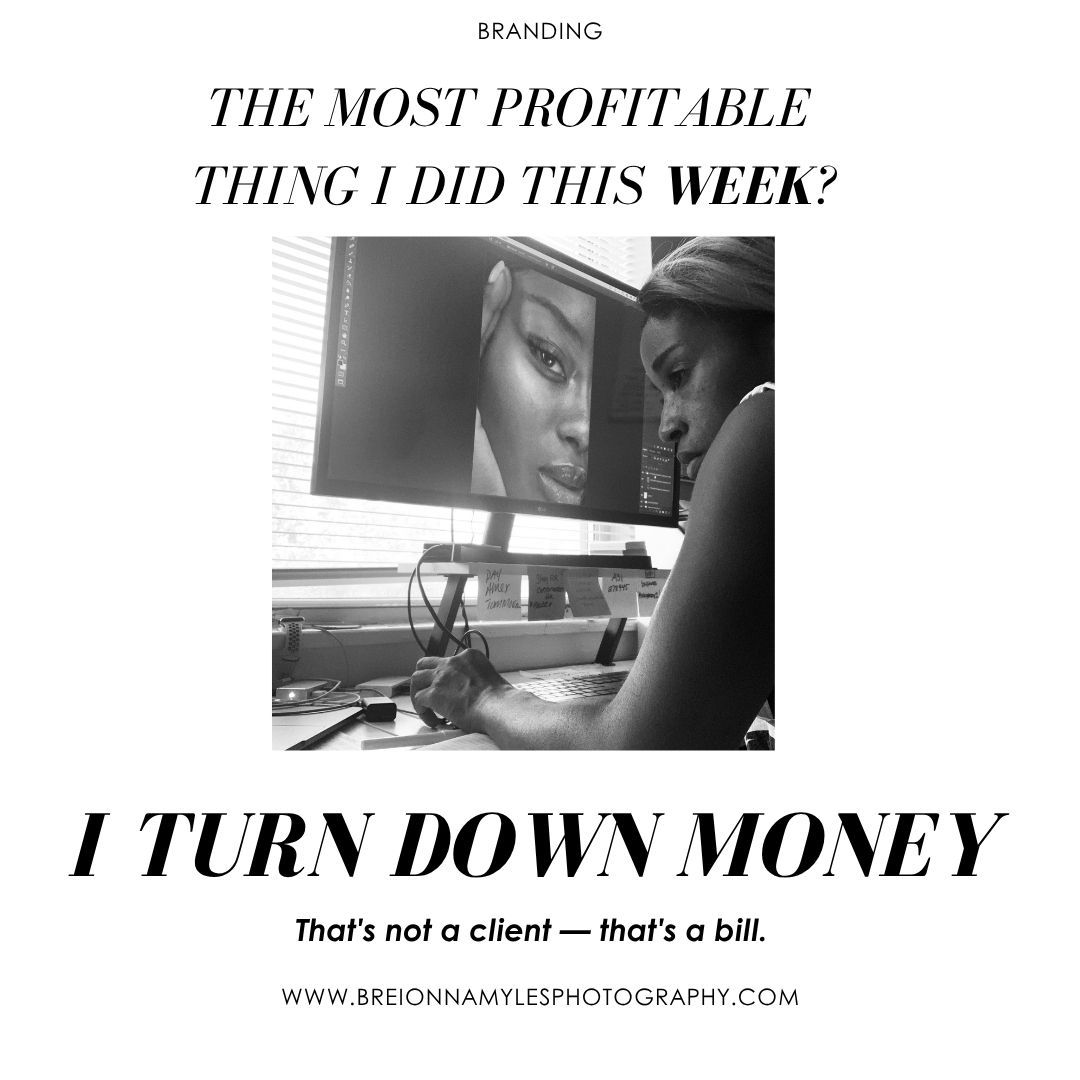
The most profitable thing I did this week was turn down money.
I know how that sounds. So let me show you the receipts — because if you're a new photographer, this math might save your business.
The Dream Gig That Wasn't
A corporate event inquiry landed in my inbox. On paper, it looked like a win: a two-day event, 150 guests, an awards ceremony to close out the weekend. The kind of booking that fills a portfolio.
Here's what they wanted:
- Friday evening coverage
- All-day Saturday coverage
- A highlight slideshow built on-site, same day, ready for that night's awards ceremony
- 400+ professionally edited images with a fast turnaround
- A venue 75 miles away — a 150-mile round trip
Their maximum budget? $500. For all of it.
The Math Most Photographers Skip
When you're new, $500 sounds like a yes. Money is money, right? But before I answer any inquiry, I run the real numbers — and I want to walk you through mine, line by line.
The hours nobody sees:
The work The time
Friday evening shoot = 3 hours
Saturday daytime shoot =5 hours
On-site slideshow build = 2 hours
Editing 400+ images~18 hours
Round-trip travel= 3 hours
Total~30 hours
What that $500 actually had to cover:
To deliver a polished slideshow by 5 PM on event day, I'd need a second editor culling and retouching images live during the event. That's not a luxury — it's the only way the deliverable physically gets done.
Cost: about $400.
Add gas and mileage for the 150-mile round trip: roughly $105. (Gas alone was only about $20 — the rest is the real cost of putting miles on a working vehicle. New photographers forget that part.)
The bottom line:
- Revenue: +$500
- Hard costs: −$505
- Left to pay myself for 30 hours of work: −$5
Read that again. Saying yes would have meant paying five dollars for the privilege of working an entire weekend.
What This Job Was Actually Worth
Established Chicago event photographers charge from $3,850 for a single full day of corporate coverage. Multi-day corporate events start around $4,000, and award ceremonies command premium hourly rates because of the pace and pressure.
I quoted $4,500 — a lead photographer, a dedicated live editor, same-day slideshow delivery, full commercial licensing, and travel. That's not luxury pricing. That's the honest floor required to do the job well.
Their budget covered about 11% of the job's real value.
This wasn't a $500 job. It was a $4,500 job wearing a $500 mask.
Now, the Part I Almost Didn't Share
Some of you who follow me know that I was recently displaced. A domestic conflict involving a former family member turned my living situation upside down, and I have been rebuilding — housing, stability, routine — in real time. So I know exactly what some of you are thinking: Bre, you need every dime you can get right now.
Take the $500.
And here's my honest answer: yes, life is genuinely hard right now — and no, that $500 still wouldn't have saved me. The math doesn't change because my circumstances did. My labor output was worth more than that check, and accepting it would have put my business in the red while I'm trying to rebuild my life. A deficit on top of a crisis isn't provision. It's a deeper hole.
But there's a bigger reason I said no, and it's the real lesson of this whole story.
Survival Mode Is a Business Killer
Displacement puts you in survival mode fast. Survival mode is loud, urgent, and convincing. It tells you to accept anything — any client, any rate, any treatment — because something is better than nothing.
But "anything" is almost always the thing that isn't aligned. The lowball client. The scope that swallows your weekend. The yes that costs you more in panic, anxiety, and resentment than it ever pays in dollars. Survival thinking doesn't just underprice your work — it erodes your judgment, your boundaries, and your peace.
My main goal this season isn't just to recover my footing. It's to come out of survival mode and survival thinking entirely — to stop accepting everything and anything that doesn't godly align with me and my business. That pattern would gravely cost me more in panic and anxiety than any check could cover, and I'm doing away with it in 2026.
Stop Taking Everything That's Green
Here's where my faith and my pricing meet. I don't have to grab every green dollar out of fear, because my provision was never coming from a lowball client in the first place. My faith is in God — and I believe what was turned down in obedience comes back immediately, doubled or tripled.
We have to stop taking everything that's green and start trusting Jehovah Jireh — the God who provides. He sent ravens to feed Elijah in the wilderness (1 Kings 17:6). He can send provision to me, and to you, without either of us abandoning the worth of the work He gifted us to do.
Undercharging isn't humility. It's poor stewardship of the gift you were trusted with.
"The laborer is worthy of his wages." — Luke 10:7
Price like you believe that.
Your Heart Check
Before you close this tab, sit with these questions honestly:
- Where am I operating in survival mode in my business?
- What frantic, fear-based decisions can I stop making this week?
- Where do I need to place new boundaries and new authority?
- What does standing on God's Word concerning me — and my business — actually look like in my pricing?
Write your answers down. Survival mode loses its grip the moment you name it.
Never Work at a Loss Again
If naming your price makes you freeze, I built something for you: a free 5-minute Worth Audit — the exact framework I use to price every inquiry so I never work at a loss.
[Get the free Worth Audit →] https://stan.store/Breionnamyles/p/the-5minute-worth-audit
And if you're a photographer who feels called to more than just bookings — to building a business that honors God — come join the community at Modern Day Scribes, where we're doing exactly that.
Breionna Myles is a Chicago-based luxury portrait and event photographer, educator, and founder of Modern Day Scribes, a faith-forward education platform for kingdom creatives.
